
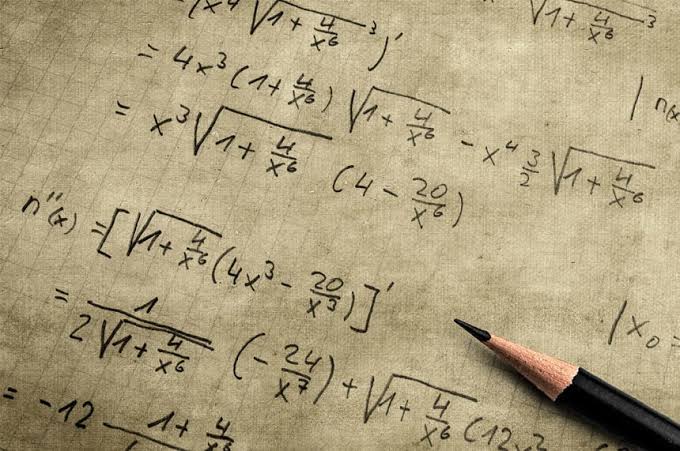
I decided to pursue a mechanical engineering degree in college. Going into college I had an excellent math background. My dad was a math teacher and when I was curious as a little boy, he got me started in very basic algebra when I was about six. I had four years of high school math, including two years of algebra, one of geometry, and one of trigonometry and my grades were at the top of my classes.
I wanted to break into my college studies slowly. Even though my entrance exams would have allow me to go directly into the first calculus course, the summer after high school graduation I enrolled in college algebra and trigonometry courses which I aced.
On my first day in calculus class the followly the fall semester, the grumpy professor stated to the large number of students assembled for his class that most of the students that took his calculus class failed the course or dropped out before the end of the semester. He went on to say that the university had just opened up a second calculus class and suggested that we hurry over to The registrar’s office and enroll in the other class. More than half of the students got up and ran out the door; they apparently had heard about his reputation. I was clueless, along with about 20 others, so we stayed in our seats. The guy was a really poor teacher, but worse than that his method of teaching was very confusing. It got to the point where I intentionally didn’t pay attention in his class and later taught myself the material covered each day out of the text book.
One of the professor’s habits was to ask rhetorical “what” questions as he lectured such as, “X to the third power plus X to the second power equals what?” I quickly learned he really didn’t want an answer. He did this so often that to keep myself from getting bored, every time he said the word “what” I would draw a line on my paper. After I had four lines in a row, on the fifth “what” I would draw a diagonal line through the other four. He averaged 25 to 35 “whats”. a day.
One day he was walking among the desks in our classrooms. He looked down at my paper and said, “Mr. Guilbeau, WHAT are you doing”. Purely out of habit, I drew a diagonal through my previous four lines. Unfortunately, at the top of my page I had written, “BOYKIN’S WHATS”. In large letters. He did’t say another word to me, but stormed off to the front class.
At the end of the semester out of the 20+ original students who remained in the class that first day only eight of us took the final exam. Everyone else dropped the class before mid-semester to get a grade of W instead of an F. [The grade of W (withdrew) would change to whatever grade you received when you retook the class. An F stayed on your transcript permanently.]
When the final grades were posted, there was one A, one B, two C, two D’s and two F’s. (For engineering and math students at least a B was required to continue with your course work so only two of us had acceptable grades.) Though I had excellent scores on all my early tests in the class (I never learned my final exam score) I think I got the B in retaliation for the Boykin’s Whats episode.
I went on to take the required two additional higher level calculus courses plus advanced calculus for engineers, but thankfully they were all taught by other professors.
By the way, my all future mechanical engineering courses required very, very little knowledge of calculus
Cajun (Rick Guilbeau)
Except for the math majors, I think that other curriculums such as engineering and architecture require calculus in their curriculums not so much because it is absolutely necessary in their student’s future work In their professions. Instead, it is one of those extremely difficult courses used to force students to change their majors if they are not prepared for the course work they will have to take in the future.
These difficult courses prevent large number of students from proceeding into engineering and architecture curriculums where they would wash out anyway. This prevents universities from having to hire large numbers of engineers and architects with at least master degrees to teach introductory engineering and architectural courses. Every university seem to include “washout” courses in engineering and architecture curriculums.